
“An Expanding We”: The 76th Bahá’í National Convention
Representatives from across Canada gathered in a consultative space that generated a vision of the progress of the Nine Year Plan in their country, and elected the National Spiritual Assembly for the coming year.
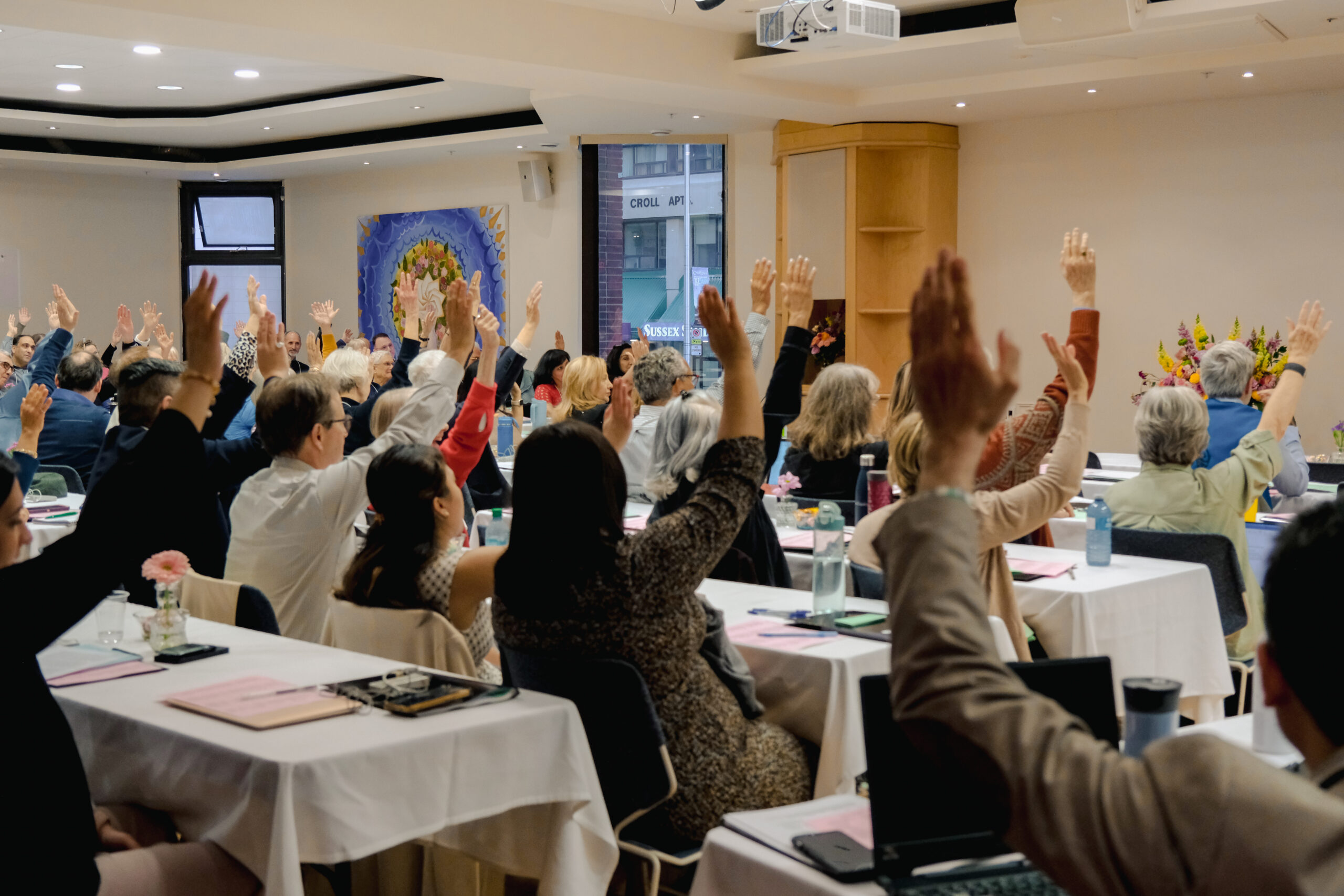
From April 23-26, 159 delegates gathered—from St. John’s, N.L., to Vancouver Island, B.C., to Arviat, Nunavut—with firm hope for Canada’s future. In an atmosphere characterized by united endeavour and a sense of trust, they consulted and cast ballots to elect the National Spiritual Assembly of the Bahá’ís of Canada for the coming year.
On a wave of joy at having received the Ridván Message a few days earlier, the delegates shared how, in localities across the country, the community—an expanding “we”—is arising as a protagonist, building havens of peace inspired by Bahá’u’lláh’s teachings.


The National Assembly guided the consultation and noted that Canada has undergone a shift in perspective over the last four years: we no longer think about growth from the top down, but from a grassroots perspective, as institutional arrangements respond to the kind of growth occurring, while extending a vision to embrace all.
In addition to the delegates, the presence and contributions of Canada’s two resident Counsellors, Mr. Ayafor Temengye Ayafor and Dr. Borna Noureddin, enriched the Convention. The deliberations were elevated by an address from the Board of Trustees of Ḥuqúqu’lláh in Canada and the presence of Dr. Firaydoun Javaheri and Mrs. Vida Javaheri, as well as members of the Auxiliary Board and observers visiting from across the country.

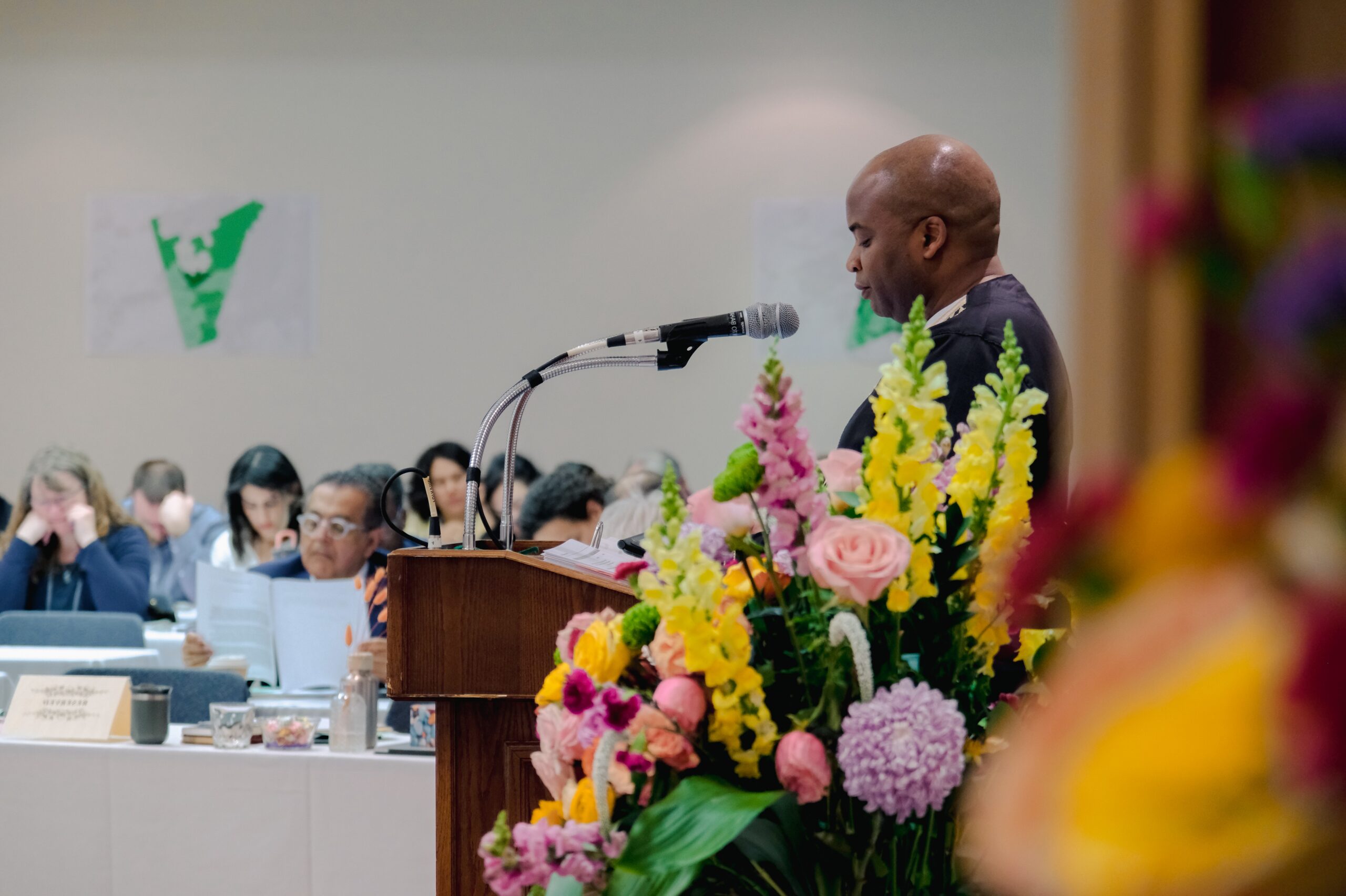
This year’s National Convention took place two weeks after a national institutional meeting that analyzed how far Canada has come at the halfway point of this Nine Year Plan, the overall vision of which is to release the society-building power of the Faith. The perspective that emerged from examining the frontiers of learning in Canada, alongside member of the International Teaching Centre Mrs. Antonella Demonte, was carried forward into the Convention.
The National Assembly acknowledged Canada’s efforts to raise up its National House of Worship. In its annual report, it stated: “[W]e are acutely aware of the mutual elements of a single divine project underway, as the work to erect Canada’s House of Worship accelerates alongside the efforts of the friends to raise up a new Canada. The first, historic, concrete steps—indeed, in some respects a breaking of ground—have been taken, as preparations begin to upgrade Leslie Street and create a new pedestrian path leading to the Temple site.”

A thread in the Convention stemming from the Ridván message was the relationship between the three protagonists of the Plan—the community, the institutions and the individual. Much has been learned about what it means for the community to emerge as a protagonist. Dr. Noureddin helped the Convention reflect on how the three protagonists are interrelated, and we cannot explore one without the others.
The questions “what does it mean to be open to all?” and “who is the ‘we’ that is acting as a community in this Plan?” were identified and explored by the delegates. A delegate from Richmond, B.C., said, “Families are initiating service projects and feel they are part of a global community. Their language is changing. They don’t say the Bahá’ís are organizing this or that. They say we are organizing…”


The Convention grappled with the concept of enrolment and discussed what has been learned about the journey of newly confirmed believers—those who have crossed the threshold— and this “singular moment in a person’s spiritual development.”[1] “How to recognize when the city of the heart is open,”[2] and how institutions can identify barriers to enrolment, as well as affirmations in both word and deed, was also a topic of consultation, considering, for example, the role of the Nineteen Day Feast and elections.
A delegate from Edmonton, Alta. shared how 13 Indigenous youth recently crossed the threshold and wanted to hold a camp to deepen on the Bahá’í Fast together while fasting for the first time. With regards to the community as a protagonist, he said, “When a population is grappling with a question, don’t try to answer it for them but think about spaces where they can explore the question themselves.”


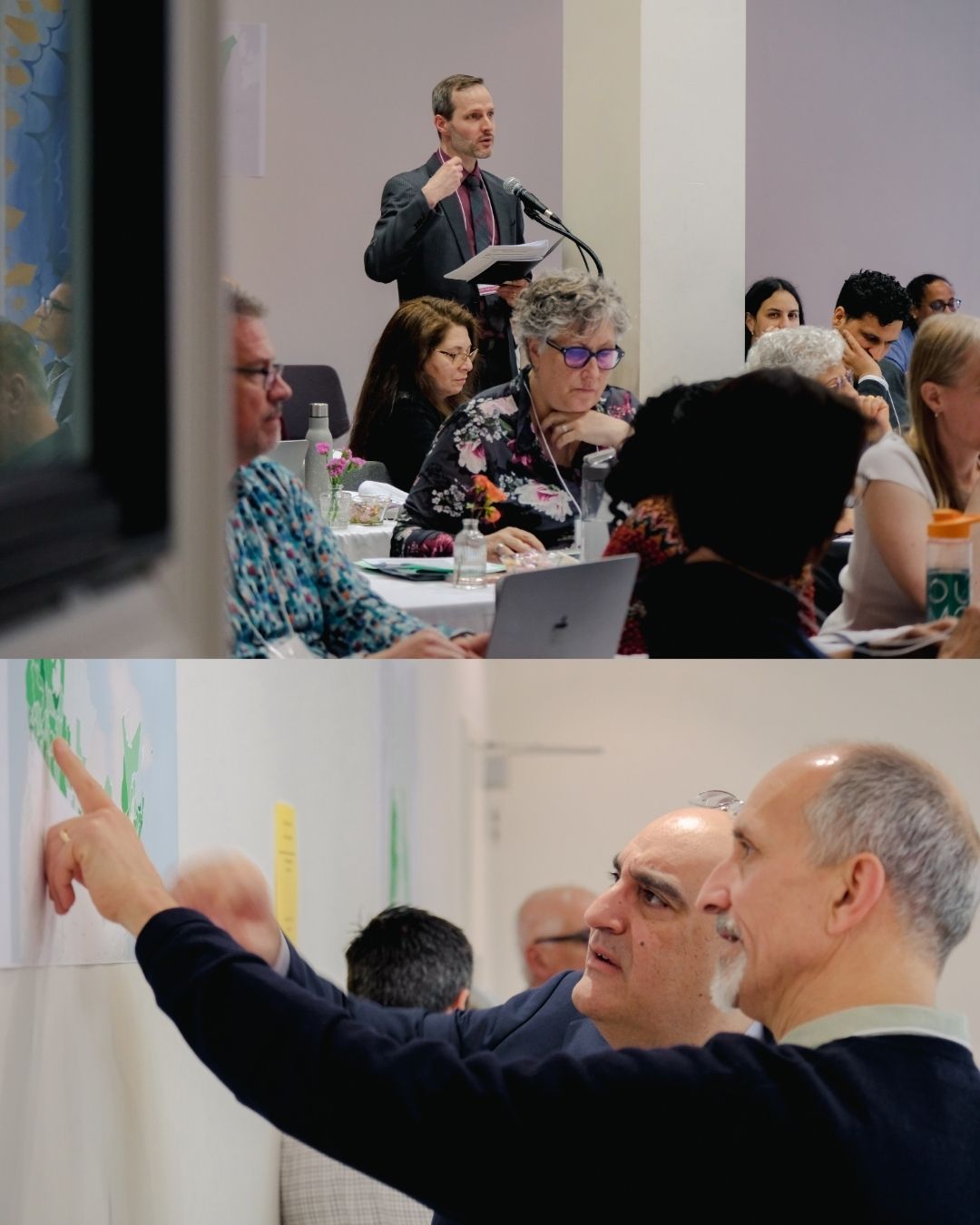
The role of youth in shaping Canada’s bright future came up frequently during the Convention. It was clear that spaces like conferences and camps have had a profound influence. As the House of Justice describes, these youths’ endeavours are often “occurring against a backdrop of conflict and disorder, economic inequity, and deep social divisions.”[3] However, as a delegate from Stratford, Ont., described, youth have shown tremendous capacity to create environments that counteract these destructive forces. They are demonstrating what it means for the community to arise as a protagonist. For example, youth in Toronto, Ont., recently opened more than 30 new pockets of activity, naturally supporting one another in this endeavour.


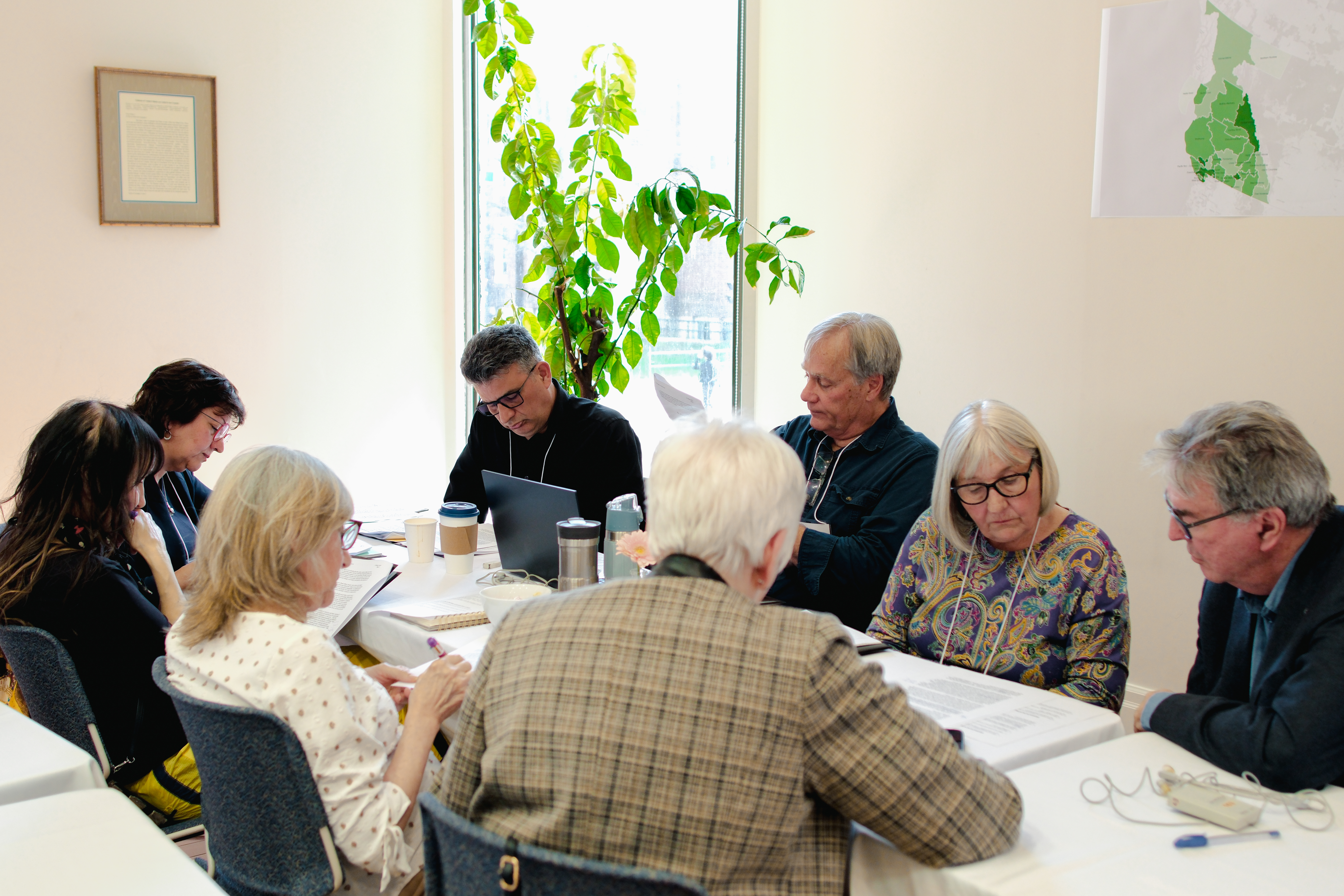
Maps of every region in the country were posted around the Convention Hall. Each cluster was outlined and coloured in a progressively darker shade of green depending on the milestone it had reached. There was considerable consultation about the concept of an “ecosystem of learning” that the institutions of the Faith are “charged with tending,”[4] including groups of adjoining clusters, each with a reservoir cluster, that learn and move together. A delegate from North Cowichan, B.C., noted that “Every cluster is learning and sharing—even if not fully grown.” Embracing this vision of regions is part of the “expanding we.”
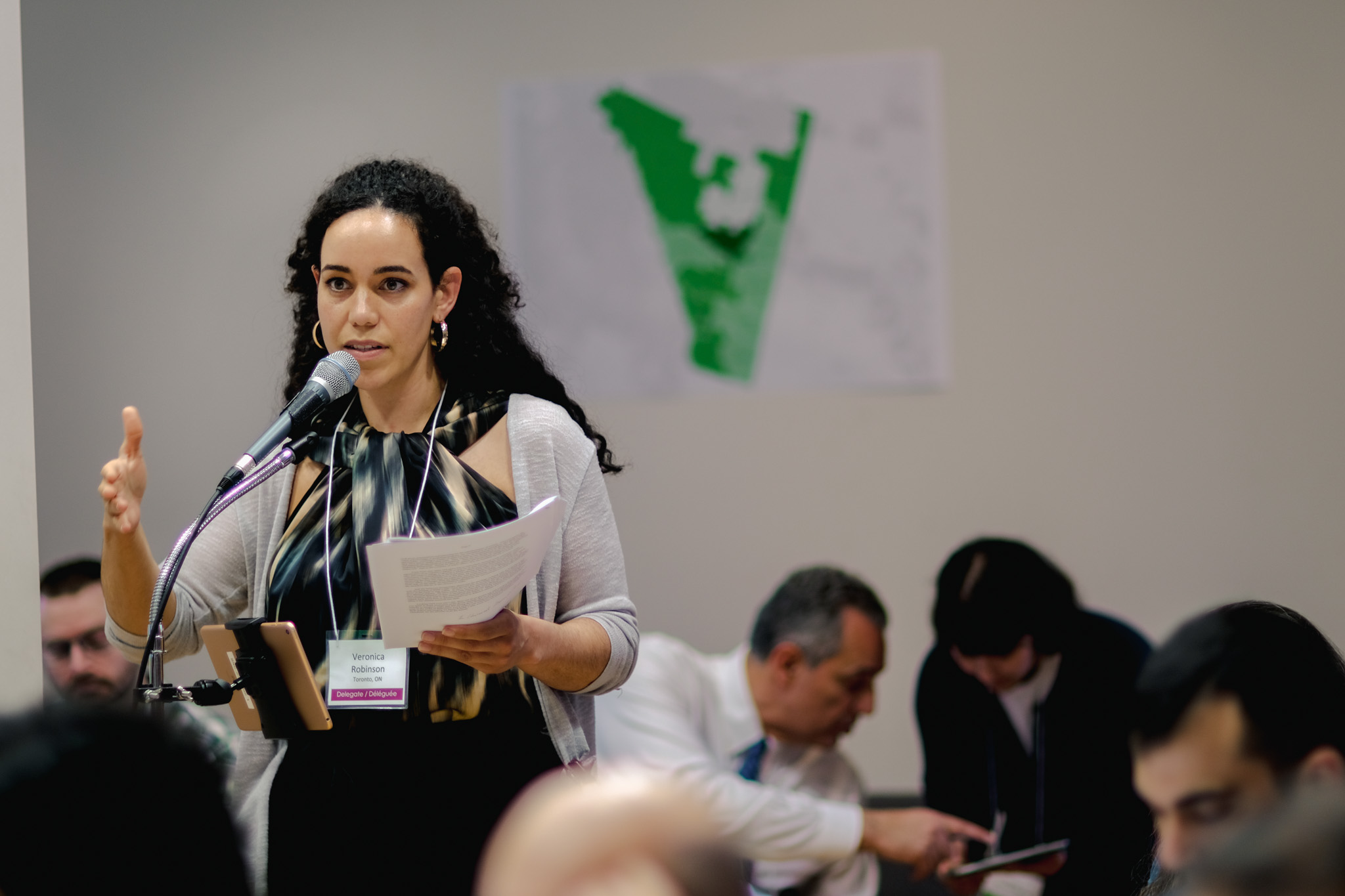


The role of the individual as a protagonist was also a theme discussed during the Convention. Mr. Ayafor described how it is the individual who draws the power of the Holy Spirit to a place, calling to mind Canada’s pioneering goals, both national and international. The effect of the seamless educational process, which starts in childhood with children’s classes all the way up to the Institute for Studies in Global Prosperity, is clearly transforming all three protagonists—the community, the institutions and the individual.
The election itself took place on a rainy Saturday morning. The dignified atmosphere of the election, along with the delegates’ spirit of humility and devotion, was very moving. There was 100 percent participation in the election, with all 171 ballots cast. One hundred and fifty-nine delegates voted in person; 12 ballots were hand-delivered or mailed. There were also no spoiled ballots or votes.


A group of Canadian Bahá’ís serving at the Bahá’í World Centre sent photos of the gardens as they prayed for the delegates’ efforts to elect the National Spiritual Assembly.
The following individuals were elected to serve on the National Spiritual Assembly for the coming year: Mehran Anvari, Alex Arjomand, Jordan Bighorn, Zelalem Bimrew Kasse, Nabet Fani, Hoda Farahmandpour, Ciprian Jauca, Karen McKye, and Veronica Robinson.
-

- Members of the National Spiritual Assembly photographed at the Bahá’í National Centre. Top (L-R): Ciprian Jauca, Jordan Bighorn, Veronica Robinson, Nabet Fani, Alex Arjomand. Bottom (L-R): Zelalem Bimrew Kasse, Karen McKye, Hoda Farahmandpour, Mehran Anvari.
Delegates and observers travelled from diverse settings—urban centres, villages, suburbs and vast regions. However, through sharing experience prompted by reflection on the Ridván Message and other guidance, all were able to see possibilities and learn from one another.
A delegate from Comox Valley, B.C., shared how her cluster has been learning about having children’s festivals with all the parents involved. Even though it seems as if they are only a few dozen friends working together, she realized they are in conversation with 200 people, opening possibilities. “We see ourselves in everything being said at the Convention, even though we’re a small community, a small cluster,” she remarked.
Some friends were also experiencing the Convention for the first time. One such delegate from Toronto, Ont., commented, “The Convention is its own institution—a truly consultative space with the delegates in consultation with the National Spiritual Assembly…It was such a reverent and prayerful space.”
Another first-time delegate from Arviat, Nunavut, said, “It’s rare to find spaces where people from diverse backgrounds and realities come together in a quest to learn. Much of what we see in society is people with certain agendas and personal interests, but here none of that was present.”
Many of the observers, who sat in the upper hall and viewed the Convention through a livestream, were also youth. A youth from Surrey, B.C., observing Convention for the first time, shared, “I was very eager to learn about Canada as a whole nation…It reminds me that there are people across the world doing these things. There are so many insights that I can take back home. It’s a joy to be here.”


The theme of hope was highlighted throughout the Convention. As the House of Justice stated in its Ridván message, “When the world’s horizons darken, hope becomes a scarce and precious resource—but one with which the community of the Greatest Name has been richly blessed because of its conviction about the future of humanity and because of what it has learned from its own experience.”
Dr. Noureddin described how the capacity of the Bahá’í community to have meaningful conversations has increased, and that one of the aspects of these conversations is that they are hopeful. “Even when raising challenges and concerns, at times, our own despair comes out,” he said, “What a gift to be in a conversation that, when discussing challenges, is characterized by hope.”
And when a loss of hope may be the result of not knowing a way forward, the Counsellors reminded us that the city of the heart of many is open. They shared that in the olden days, there was often only one entrance into a city, but that, in modern cities, there are many ways to enter. This speaks to the receptivity in Canada today.


In an excerpt from its closing remarks, the National Spiritual Assembly stated:
“What has been striking in your comments is how communities and clusters of every kind, in every setting, are advancing together. Across the northern territories, whose vast distances and sparse population are a singular reality yet were honoured by particular mention of the beloved Master, the seeds planted over many years are sprouting—and it was moving to hear the stories of connection between two of the delegates here. The examples of how the Indigenous and French-Canadian populations are arising to advance the work of the Plan, and how the Indian community in Brampton is crowding the Feasts, were joyful. The references to the real condition of humanity—in East Hastings, in Stratford, in neighbourhoods—made it clear that while we grieve with humanity, we are not disabled by the suffering we see. While we are affected by the forces of society, we are not confused by them.”
“In a world that has resigned itself to conditions of fracture and division, you, His loved ones—and those known as Bahá’ís or not—are clearing a path for the peoples of Canada, enabling them to draw nearer and nearer to the Threshold of Oneness. Swift to act, and eager to learn.”
Photos: Gordon Braithwaite with contributions from Liam Dousti
[1] From the Universal House of Justice to the Continental Boards of Counsellors, 30 December 2021.
[2] From the Universal House of Justice to the Continental Boards of Counsellors, 31 December 2025.
[3] From the Universal House of Justice to the Bahá’ís of the World, Ridván 2026.
[4] From the Universal House of Justice to the Continental Boards of Counsellors, 31 December 2025.

Category: Uncategorized
